
Company names change, and their old domains are often kept alive as signposts. That is what has happened here. A request to cellpointmobile.com returns a 301 status with a location header pointing to cellpointdigital.com, so the visitor never sees a page on the original name. The destination belongs to CellPoint Digital, which presents itself as a payment orchestration business focused on travel. For a link buyer the key fact is simple: the old domain is a forwarding address, not a website.
A Permanent Move Rather than a Dead End
A 301 status code tells browsers and search engines that a resource has moved for good. Unlike a temporary redirect, it signals that the old address should be replaced by the new one in indexes and bookmarks. Search engines generally consolidate signals from the old URL onto the target over time.
That is why cellpointmobile.com still carries measurable authority while showing nothing. The links that once pointed at it still exist on other websites, and the redirect hands visitors and crawlers on to cellpointdigital.com. The domain keeps a role as a bridge, but the content, the editorial decisions and any future articles belong to the new site.
What the Destination of CellPointMobile.com Offers
The CellPoint Digital homepage carries the title "Leading Payment Orchestration" and describes the company as providing omni-channel payment and digital commerce platforms for airlines, travel companies, retailers and other merchants. Its menu lists solutions such as a hosted payment page, intelligent routing, fraud management, payment reconciliation, embedded finance, alternative payment methods and FX optimisation.
Industry pages cover airlines, hospitality, travel and e-commerce. A resources section links to blogs, a newsroom, case studies, ebooks and guides, events and technical documentation, and a company section includes the firm's story, team, careers and contact pages. The homepage copy stresses payments data and specialists who work with travel brands, under the line "Intelligence, powering payments".
Old Brand Names and What They Still Signal
The "mobile" in the old name reflects an earlier positioning, while the current site speaks of digital payments and orchestration across channels. The destination does not explain the change on its homepage, so this profile does not guess at the date or reasons behind the rename. What can be verified is the outcome: the earlier address is still owned, still renewed and still forwarding, which is how careful companies usually handle a rebrand.
For anyone researching the brand, that continuity is useful. Old press coverage and partner pages that link to cellpointmobile.com still deliver readers to the right business, and nothing on the old name competes with the new one in search.
The Age and Links Behind CellPointMobile.com
The domain cellpointmobile.com was registered on 24 July 2006, which makes it 20 years, 2 months, 15 days old, and it is held through CSL Computer Service Langenbach GmbH d/b/a joker.com until 24 July 2027. Keeping a domain renewed for that long after a rebrand is a sensible choice: dropping it would break inbound links and could let someone else pick up the address.
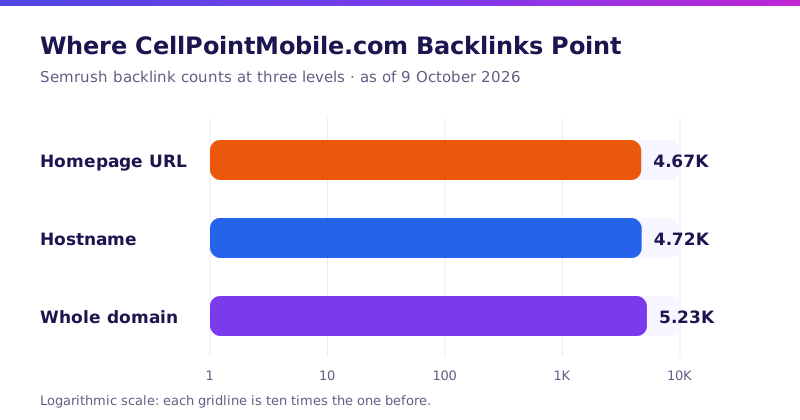
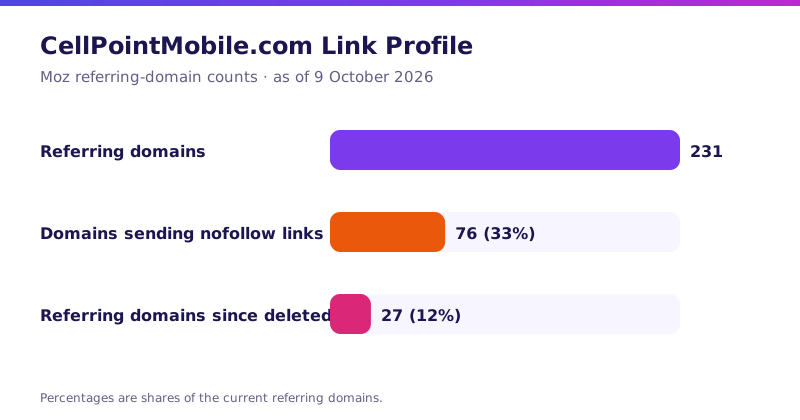
Those inbound links are the domain's main asset. There are 231 referring domains and 1.04K backlinks, about 5 per domain, with a spam score of 1%, which is very low. A second index counts 4.67K backlinks. For a business-to-business payments brand, such links typically come from industry press, partner announcements and event listings, which carry a clean, professional profile.
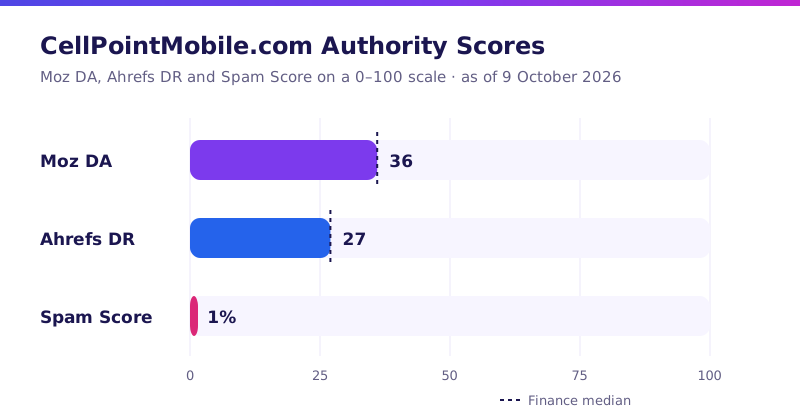
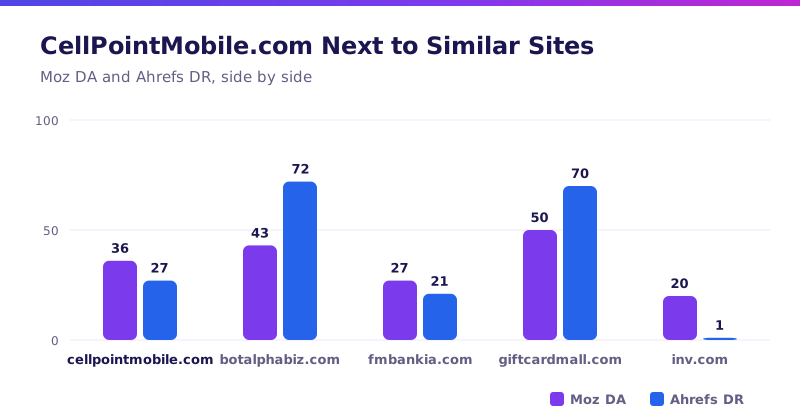
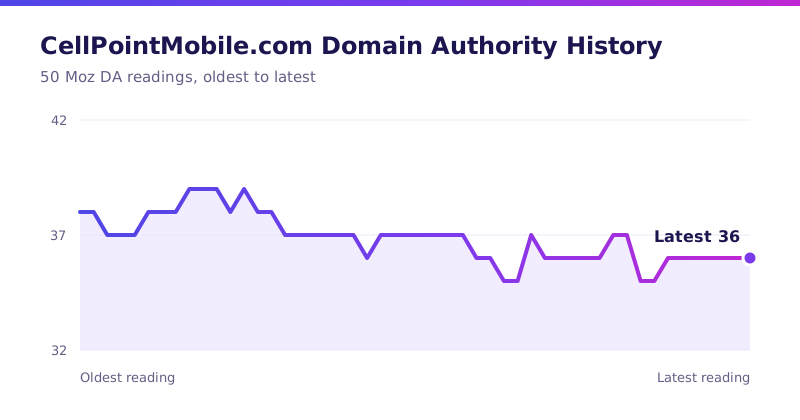
DA has been steady for years, ranging from 35 to 39, latest 36. DR is 27. The stability suggests that the old links have not been lost, even though new links now go to the current brand.
Why There Is No Search Footprint
No organic traffic or keyword estimate is available for cellpointmobile.com. That is exactly what a working permanent redirect should produce: once search engines accept the move, they rank the destination's pages instead, so cellpointmobile.com drops out of results. A buyer should not read the missing figures as a penalty. They simply confirm that the redirect is doing its job.
The same logic means any metrics that matter for a placement belong to cellpointdigital.com, not to the old name. If you are evaluating CellPoint as a publisher, assess the destination on its own figures and content.
How a CellPointMobile.com Guest Post Would Actually Work
It would not. With every request forwarded, there is no page on cellpointmobile.com where an article could sit, and no editor of the old domain to contact. Any approach would go to CellPoint Digital, whose blog and newsroom read as company publishing: product news, payment insights and case studies. Nothing on the homepage invites outside contributors or mentions sponsored content.
Some sellers market redirected domains as link opportunities, claiming that an article can be placed on an old brand name. Treat that with caution. If the domain only redirects, a seller cannot place a post there without the owner changing its configuration, and a payments company is unlikely to do that. Ask for a live example before paying anything, and check our paid guest post rules for the questions that matter.
Reading the CellPointMobile.com Numbers as a Buyer
The figures describe an old corporate domain with clean links, steady authority and no pages. DA 36, DR 27 and a spam score of 1% would look attractive on a live site, but here they measure the past rather than a place to publish. Their practical value is to the company itself, because the redirect keeps its historical link equity flowing to the current brand.
For a buyer who wants a payments or fintech audience, the better path is to look at the Finance category for sites that publish contributors, or to compare another redirected case in this batch, clipboardhealth.com, where a company also moved to a new name. Our guide explains how to confirm a site serves real pages before you shortlist it.
In short, cellpointmobile.com is a signpost. It tells you where CellPoint went, and it does that well, but it cannot host your article. The interesting question is whether the destination's own blog would ever take outside work, and nothing published there suggests it does.