
Few domains in this directory feel as much like a time capsule as inv.com. The inv.com index page is a plain list of links titled simply "Index Page", with a logo GIF, a vote image and fourteen numbered essays. A notice at the top explains that, because of hacker activity, the site was cut back to a small set of reviewed files and asks readers to see the legal disclaimer first. There is no menu, no newsletter box and no advertising. For a guest post buyer, that already answers most questions, but the history and the numbers are worth a closer look.
Horizon Capital Research and Its Single Author
The legal disclaimer names the publisher as Horizon Capital Research, Inc., which produces the Interactive Investor, and its portfolio manager Ronald Soong. His bio lists an electrical engineering degree, a Stanford MBA, a master's degree from the University of Michigan, and earlier financial analysis work at Morgan Guaranty Trust and Chase Manhattan Bank. The firm calls itself a value investor, in the tradition of buying below intrinsic value, and says the site is kept for research and general purposes under securities rules, urging readers to consult their own advisers.
No contact details appear on that page. The only link returns to the home page. So inv.com is a personal research outlet with one identified voice, not a publication with an editor who answers pitches.
Essays That Run from Markets to the Renaissance
The numbered list on inv.com mixes finance with philosophy and politics. Market pieces include The Analysis of Financial Markets, Manias in Markets, The Nature of Stock Market Equilibrium and Value Investing and AI. A series called The Democratization of Generative AI links thirteen research notes, one titled "Is Generative AI Logical?" and another on a deserving valuation of AI. Beyond markets sit essays called What is Truth?, Practical Reasoning, America in Transition, The Facets of Nationalism, Democracy or Autocracy, The Renaissance and the Modern World and Average Earth Temperatures. One essay, What Is The Future?, is offered as a PDF with a text version.
The homepage summary argues that the market system grew from centuries of development, from the Greeks to modern democratic capitalism, and that markets alone cannot solve America's current problems. It quotes Johan Norberg's book Peak Human and closes by hoping the "continuing discussions and articles will be helpful to you."
Recent Activity on Inv.com
The site is not abandoned. Dated links on the index point to commentary running from July 2024 through October 2025, and further entries dated November 2025 and February 2026. Separate pages cover portfolio returns in real financial markets and total 2022 returns with comments. The update pattern is occasional, a few entries a year, consistent with one author adding notes when markets give him something to say.
How Inv.com Is Built, One File at a Time
The technical shape of the site says as much as its words. Every essay is a separate static .htm file, named in a short, almost private shorthand such as 87uvav.htm or 7uv52v.htm, and one link still uses plain http while the rest use https. The homepage carries no meta description and no language tag, and its title is just "Index Page". Nobody has dressed the site up for search engines or for advertisers.
That matters for anyone judging inv.com as a link source. Pages built this way rarely change, which is good for permanence: an essay from years ago still sits at the same address. The flip side is that there is no content management system, no category structure and no place where a new article from an outside author would slot in naturally. Any added page would have to be hand-built by the owner and linked from the index list.
The reference to hacker activity also deserves attention. The owner says the site was reduced to a small set of reviewed files, which suggests he is cautious about what goes onto the server. A stranger asking to add a page with outbound links is the kind of request such an owner is likely to refuse.
Why an Inv.com Guest Post Is Unlikely
Nothing on the pages read offers space to outside writers. There are no other bylines, no sponsored labels, no advertising slots and no contact form. The tone is that of an investor's notebook, which would make any third-party article stand out sharply. An approach for an inv.com guest post would therefore be cold outreach to a site that does not invite it, with no published route to send it through.
If you still want a finance placement with a clear commercial door, compare it with fundfireinsight.com in the same batch, or browse the Finance category.
A 1995 Registration with a Thin Link Base
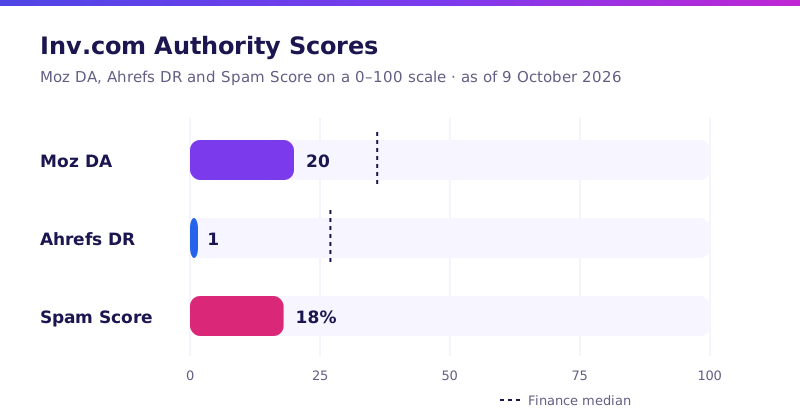
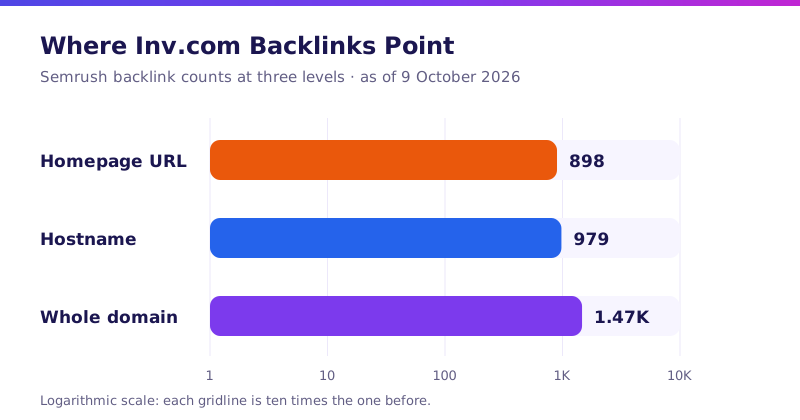
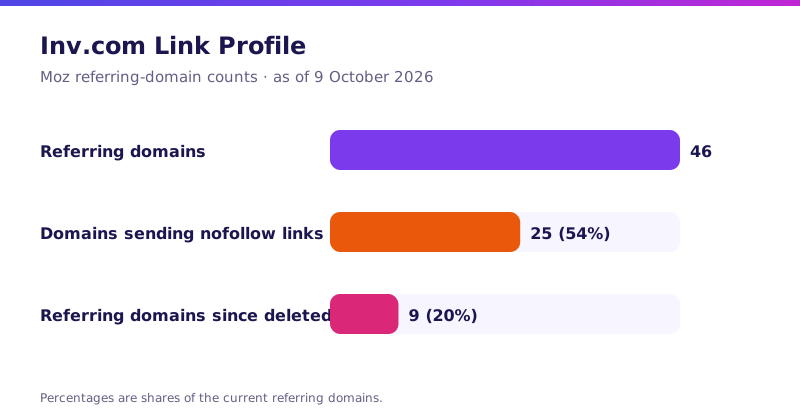
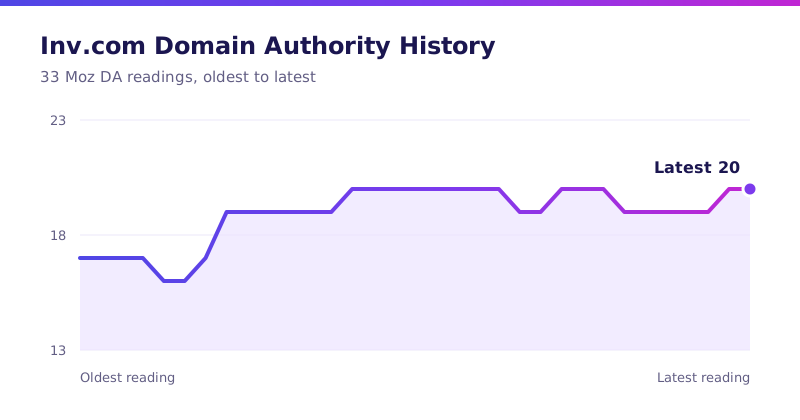
The domain was registered on 24 January 1995, making inv.com 31 years, 8 months, 15 days old; it renews through Network Solutions, LLC until 25 January 2034. Very short .com names from that era are rare, and the age alone gives the site a certain standing. The link profile is small: 46 referring domains and 71 backlinks, with a spam score of 18%. DA history ranges from 16 to 20, latest 20.
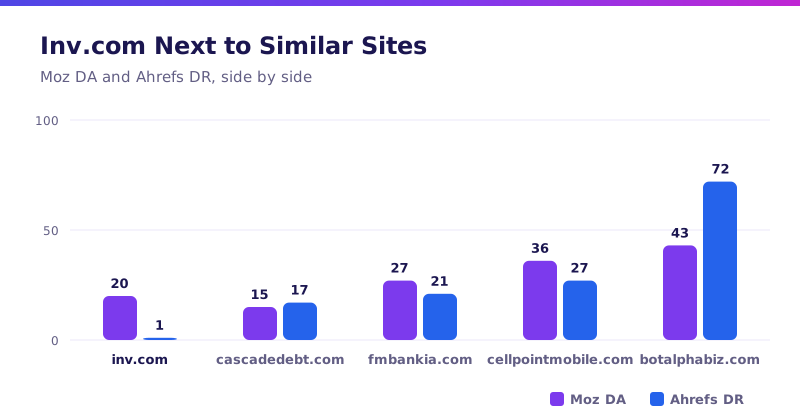
The gap between DA 20 and DR 1 is notable. A DR this low means that link model gives the site almost no weight, while DA treats it more kindly. When two scores disagree this much, treat the lower one as the cautious reading.
What the Inv.com Numbers Tell a Buyer
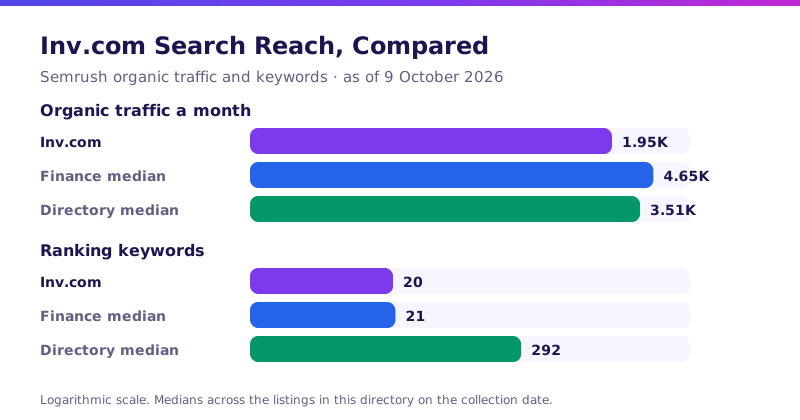
Estimated organic traffic is about 1.95K monthly visits from 20 ranking keywords, roughly 97.7 visits per keyword. Some of that likely comes from the short, memorable domain rather than from the essays themselves. The audience, such as it is, reads long-form opinion on value investing and economic history.
For link buying, inv.com is best treated as a reference point rather than a target. It shows what an aged, owner-run research site looks like: real authorship, steady but slow updates, and no sale of space. If you ever do reach the owner, ask in writing about link attributes, permanence and labelling, as set out in our paid guest post rules, and use the metrics page to compare inv.com against sites that actually publish contributors.