99math.com behaves like a business with customers, not like a blog looking for contributors. Its homepage carries the title "Free Multiplayer Math Game" and a short promise: the easiest, most fun way to practise math facts in a classroom, instantly engaging and suited to whole-class activities, with no student accounts required. That is the whole public pitch, and it explains why almost every number in this listing leans toward the high end.
Built for a Teacher with One Minute to Spare
The product idea is simple. A teacher opens a game, students join from whatever device they have, and everyone answers arithmetic questions against the clock. The company's US launch announcement, dated 15 September 2020 from Tallinn, Estonia, adds that a game takes under a minute to set up, needs no app or download, and gives the teacher detailed results per student. It addressed K-8 educators in the United States and said the game was already used in schools in over 100 countries, with more than 40 million problems solved.
Those 2020 numbers are old and should not be treated as current. Still, they show what the brand has always sold: low friction for the teacher. The same logic shapes the page itself, which is a single-page application that loads its content through scripts, so the homepage text visible to a simple request is mostly a title and a summary.
A Company Site, Not a Publisher: 99math.com Guest Post Routes
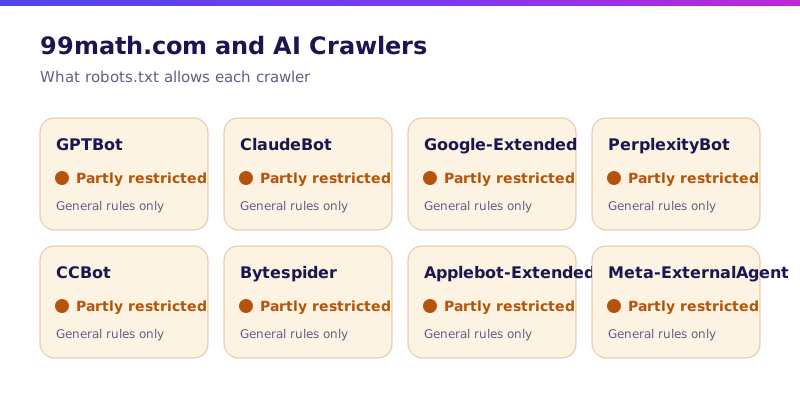
99math.com does not publish articles for outside writers. No sitemap was found, the robots file restricts only part of the site, and no contributor, advertising or press page appeared on the homepage request. News lives on a separate blog subdomain, where the launch announcement names Timo Timmi as co-founder and says the start-up was recognised among the 50 most innovative education technology companies in the Nordics.
For a buyer, that settles the format. A 99math.com guest post would not be an article in a magazine section. It could only be a sponsored mention, a resource listing, an educational partnership or a feature that the company agrees to in a one-off deal. None of those routes is advertised, and the site does not state any prices.
Where the 99math.com Traffic Comes From
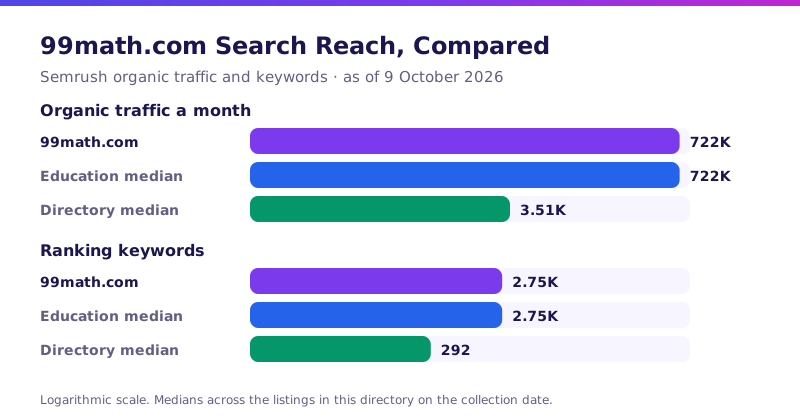
Estimated organic traffic is about 722K visits per month across 2.75K keywords. That is 263 visits per keyword, a high ratio, which says that few terms do most of the work. Most likely these are brand and game-related queries from teachers and students. Search value is also estimated at about $2.17M dollars a month in equivalent ad spend, a hint that the terms are commercially interesting to advertisers in education.
Registry data dates 99math.com to 2 July 2018, an age of 8 years, 3 months, 7 days. It is held through EuroDNS S.A. and the registration runs to 2 July 2027. That is long enough to have built habits: teachers return to the same address each school year, which brings direct traffic that no metric here counts.
Authority Numbers Worth a Second Look
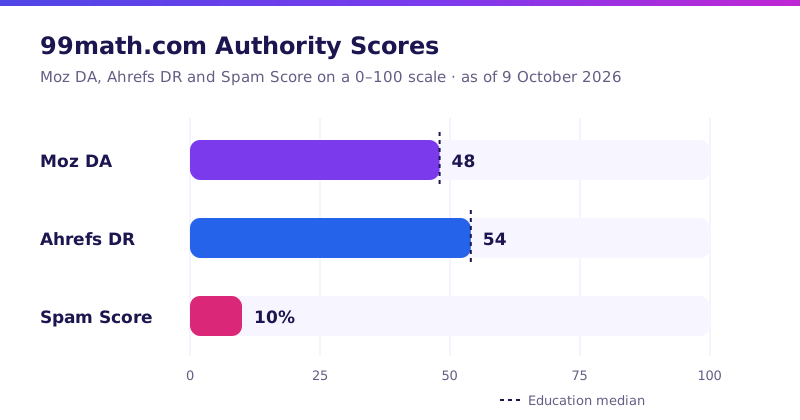
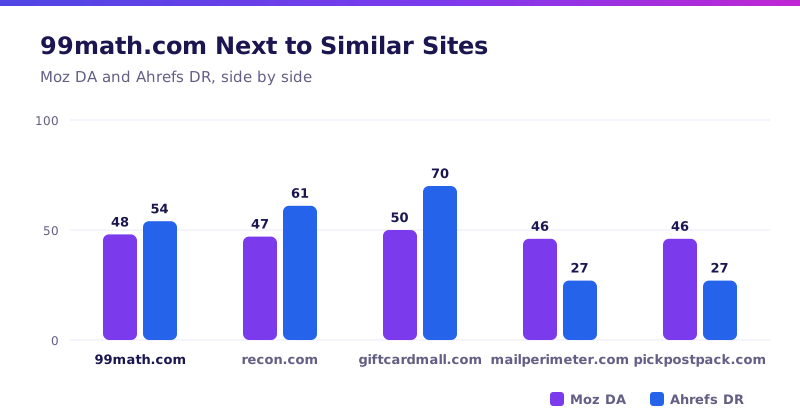
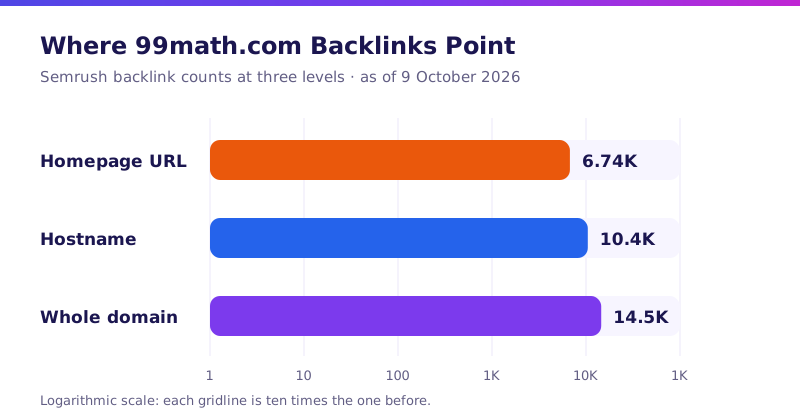
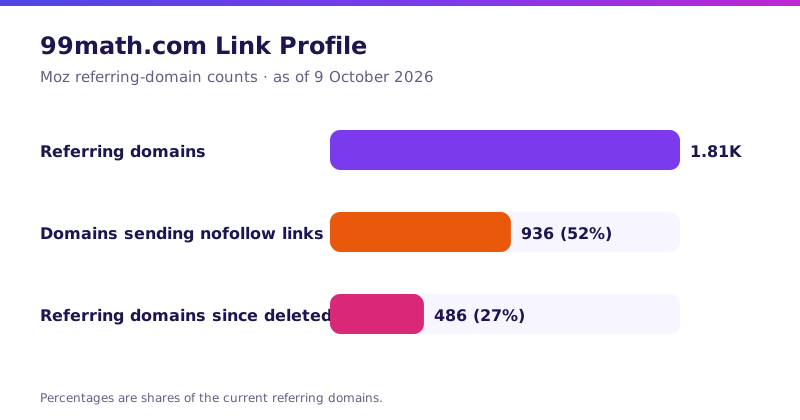
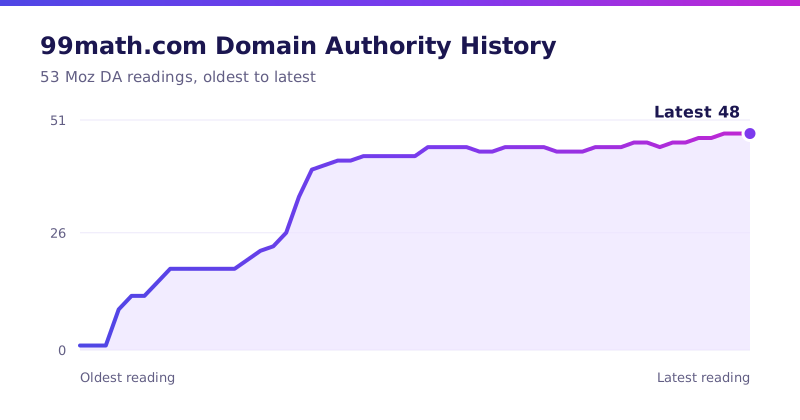
Domain Authority stands at DA 48 with a spam score of 10%, a reading high enough to warrant a look at who links in. The site has 1,811 referring domains and 7.31K backlinks, an average of 4 per referring domain, and the DR is 54. A separate count finds about 6.74K links pointing at the homepage alone. Many educational links come from school pages, lesson-plan lists and teacher forums, which spam models can flag as low quality even when they are entirely natural.
So a spam score of 10% here is a prompt to inspect, not to reject. Open the metrics explanation at /metrics/ for how each number is defined, and then look at a sample of the actual linking pages.
What an Education Buyer Should Consider at 99math.com
If you sell something teachers or parents might use, such as a worksheet generator, a tutoring service or a classroom device, 99math.com attracts exactly that audience. The challenge is access. The company has a business model of its own, and a link from the game to a third party would have to fit the child-safety expectations of a product used by pupils. Expect strict limits on promotion. In the United States, sites aimed at children under 13 also fall under the COPPA rule on collecting personal data.
Lower-friction alternatives exist in the Education category, where blogs with open submission rules may reach parents and teachers, though rarely at the scale 99math.com reaches through its game. Weigh that gap honestly: an open blog gives you a guaranteed placement on a smaller audience, while a pitch to this company gives you an uncertain answer about a much larger one.
The Company Story Behind 99math.com
The launch post is the only company narrative that could be read. It places the start-up in Tallinn, Estonia, says teachers or students can start free math games on a phone, tablet or computer, and reports more than 40 million problems solved by pupils worldwide at the time, in September 2020. It also says the firm was named among the top 50 most innovative education technology companies in the Nordics. The post is a press release in tone, which is typical of how edtech firms describe themselves.
What does this mean for a link buyer? A product company has a brand to protect and often a board, investors and school-privacy obligations. That is why a 99math.com guest post is unlikely to be sold like a product, and why a request framed as a classroom resource that helps teachers has a better chance than one framed as an advertisement. The homepage reinforces the same message: free, quick, no student accounts. Align your pitch to those three words and the conversation is likelier to start.
Practical Verdict on a 99math.com Guest Post
Treat 99math.com as a partnership target rather than a purchase. The numbers are attractive: DA 48, DR 54, high traffic and a clean business identity. The route is closed until someone at the company says otherwise. Write a direct, specific proposal that offers value to teachers, such as a free classroom resource, and ask what format is possible. Do not pay an intermediary who claims to sell a 99math.com guest post without showing a live example on the 99math domain. Wider pre-purchase advice sits in the guide, and disclosure duties are summarised under paid guest post rules.