
Not every domain in a directory is a publication. Coomer.com is a family name that has been turned into a product page, and the honest summary is that it does not run a blog. This profile explains what is on the page, what the figures suggest, and why a coomer.com guest post is a hard case to justify.
Opening Coomer.com: A Sign-Up Page for Surname Addresses
Load the www address and the page is titled "Your Name as Your Email," under the Hover Realnames banner. The headline invites the visitor to find a personal address that ends in @coomer.com, and the copy argues for using your own name as your email identity. The page lists three selling points: memorability, a formal look and the chance to claim the address before someone with a similar name does.
The offer is specific. Each address costs $45 per year and includes 10 GB of storage, support from the provider's staff and spam and virus protection. There is also a suggestion to buy matching names for family members. The footer is the standard footer of the domain company, with product links, support and sign-in options, and a 2026 copyright line.
None of this on coomer.com is editorial. There is no article list, no author, no date and no category menu, and no mention of contributors, advertising or sponsorship.
A Bare Address Fails with an Expired Certificate
One technical detail is worth recording. Requesting the bare address over a secure connection returned a message that the certificate had expired, whereas the www version loaded. A browser would show a warning in that situation. For a buyer weighing coomer.com, this is a small but concrete sign that the domain is used as a pointer for a shared product page, not as a carefully maintained web property.
Thirty Years of Coomer.com Under One Registration
The registry record is the strongest evidence here. The name was registered on 7 June 1996, which makes it 30 years, 4 months, 2 days old, and it is paid until 6 June 2027. The registrar is Tucows Domains Inc., and the nameservers belong to a mail-hosting service, which fits the email product on the page. Its most recent update is dated 8 May 2026.
That long history explains why coomer.com has a link profile at all, even without a single article. Links to a surname domain may come from people, forums and directories that mentioned a person or family by name over many years. Age counts for something in link evaluation, but it says nothing about whether new content would be read.
Reading the Coomer.com Figures with Care
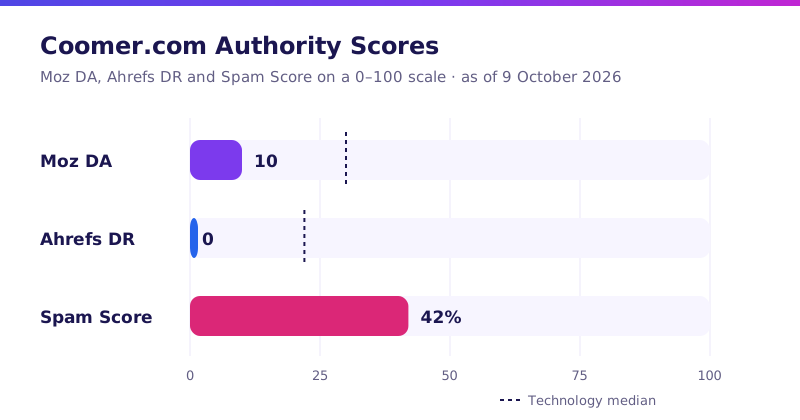
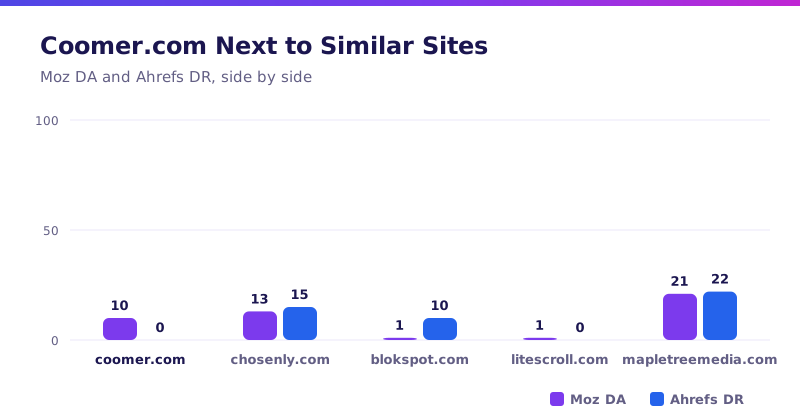
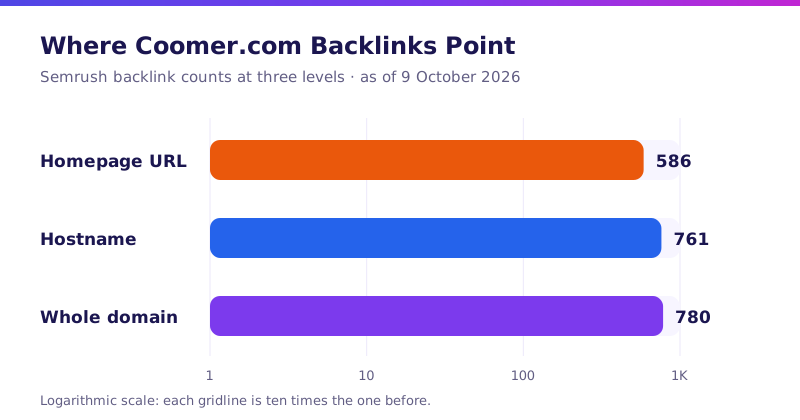
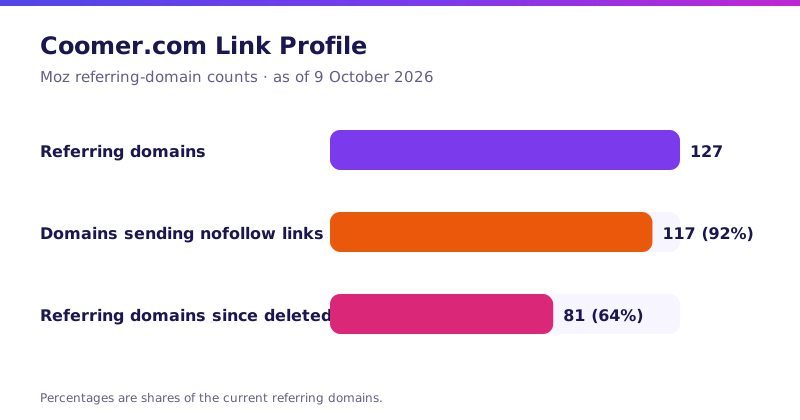
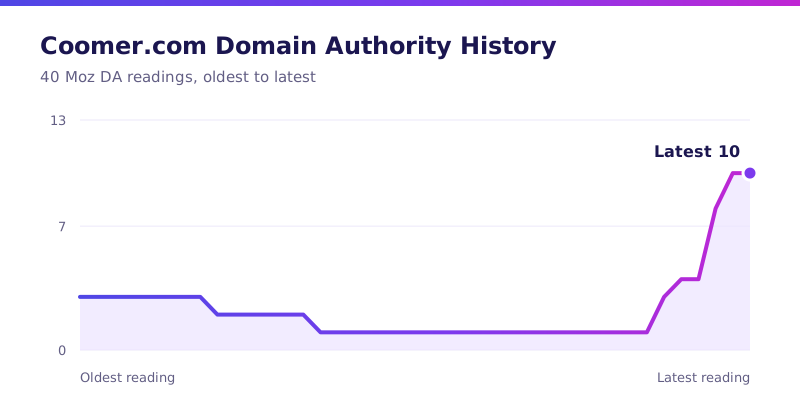
DA is 10 and DR is 0, so the two measures disagree by 10 points. The spam score is 42%, which is high enough to deserve attention. The link profile counts 127 referring domains and 134 backlinks, with a wider count of 586. A sceptical reading is that many of those links point at older uses of coomer.com and have little to do with the email page shown today.
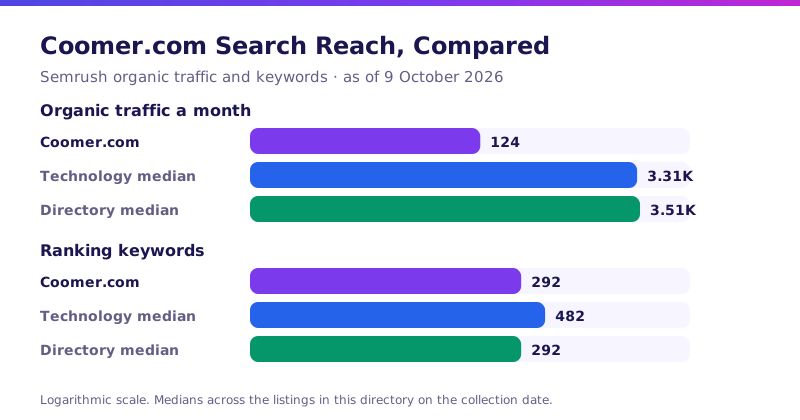
Search data adds a second wrinkle. Estimated organic traffic is only 124 visits, yet it comes from 292 keywords, about 0.42 visits per keyword. That is a long tail of queries each bringing a trickle. Because the name is a surname and also appears in unrelated searches, some of that traffic may be people looking for something other than this page. I cannot confirm what those queries are, and I do not guess further. The spam score is consistent with a name that attracts mixed, low-quality links, though the score alone does not prove it.
Why Surname Domains Behave Differently from Blogs
A surname domain is valuable to the people who share the name, which is why a provider turns it into an email product. A reader who arrives looking for a person, a family history or a business with that name expects something personal. An article about software, travel or finance placed there would not match the intent of nearly any visitor, so even a technically valid link would sit far from the topic of its page. That mismatch is a quality problem for the link itself, separate from the numbers.
It also means the page can change purpose quickly. The same domain could be sold to a family, redirected to another brand, or switched to a different email partner, and nothing on the current page promises otherwise. The registration runs until 6 June 2027, which gives a time horizon, but not a commitment.
What a Placement on Coomer.com Would Even Look Like
To publish a guest post, a site needs somewhere to put it. This one has no blog path, no template for articles and no stated owner, so any coomer.com guest post would have to be built from scratch, probably on a subpage that does not exist yet. That raises practical questions a seller must answer before any money moves. Where will the article live? Who controls the page and for how long? Will the link be tagged follow or nofollow? Will the product page above it change?
If no one can answer, the arrangement is closer to renting a corner of someone else's sign-up page than buying a blog placement. The rules in our paid guest post rules apply doubly here, and the buyer guide lists the evidence a seller should show.
Is Coomer.com a Sensible Buy for a Guest Post?
On the numbers, coomer.com is weak in the places that matter. Its DA of 10 ranks 39th among 49 listings, its spam score of 42% ranks 4th for spam in the directory, and its traffic of 124 visits is small. Age is the standout, putting it the 5th oldest, but age alone does not create readers.
My advice is to treat it as a domain with history, not as a publisher. If your goal is a link from a thirty-year-old name and you accept the spam score, you could negotiate a very low price, with written terms about page location and link attributes. If your goal is an audience that reads articles, look at publishers in the Technology category instead. For definitions of the columns used above, see the metrics page.